


Introduction
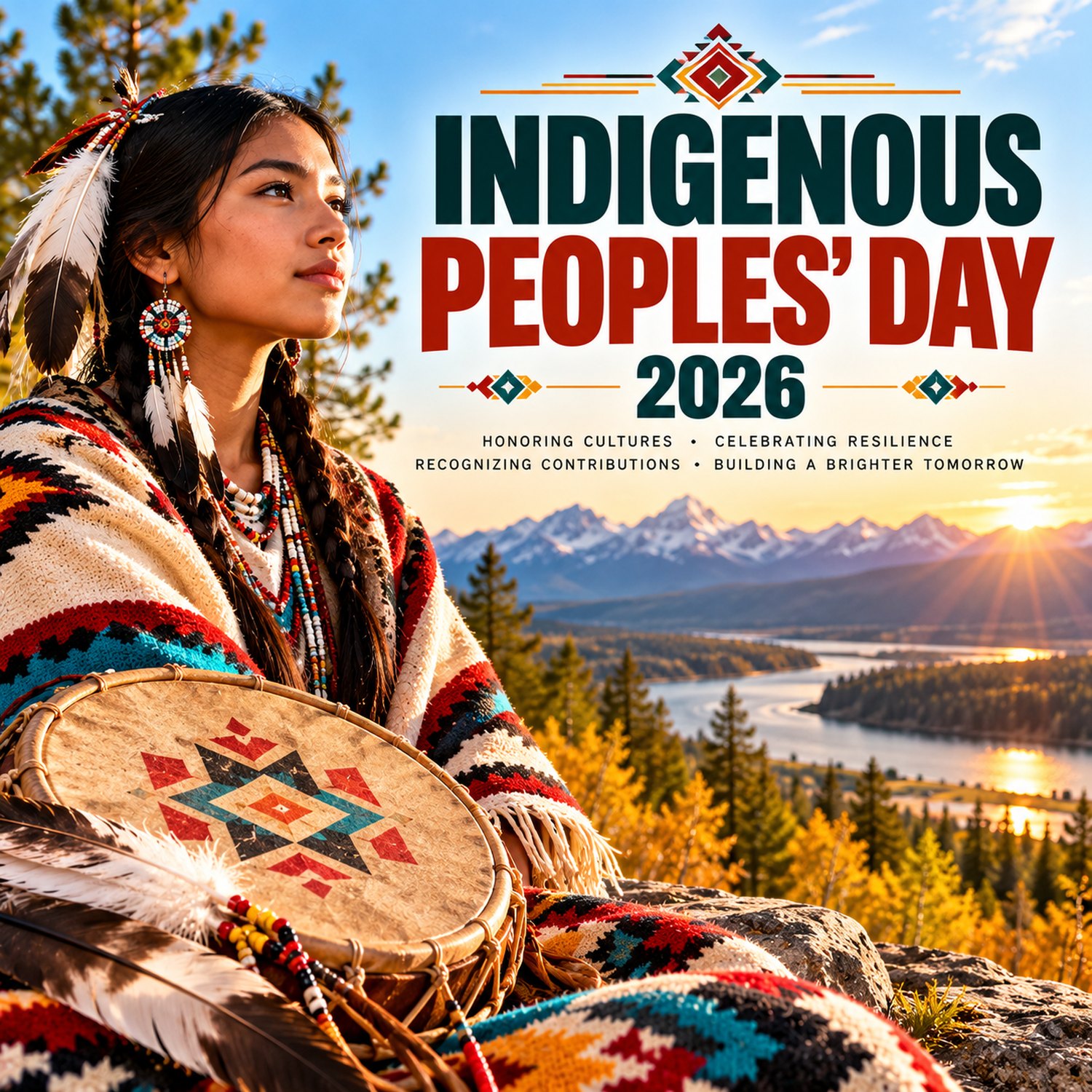
Indigenous Peoples’ Day 2026 will be observed on Monday, October 12, 2026. The observance recognizes Indigenous peoples, their cultures, histories, contributions, and continuing presence in society.
The day is observed on the second Monday of October, which is also the date of the U.S. federal observance of Columbus Day. However, Indigenous Peoples’ Day and Columbus Day have different focuses, and communities across the United States may recognize the date differently.
This guide explains the date, meaning, history, importance, relationship with Columbus Day, and respectful ways to observe Indigenous Peoples’ Day in 2026.
When Is Indigenous Peoples’ Day 2026?
Indigenous Peoples’ Day 2026 falls on Monday, October 12, 2026.
The observance generally takes place on the second Monday of October each year.
| Year | Date | Day |
|---|---|---|
| 2025 | October 13 | Monday |
| 2026 | October 12 | Monday |
| 2027 | October 11 | Monday |
| 2028 | October 9 | Monday |
Because recognition varies by location, schools, businesses, and local governments may have different schedules or observances.
What Is Indigenous Peoples’ Day?
Indigenous Peoples’ Day is an observance that recognizes the histories, cultures, achievements, and contributions of Indigenous peoples.
It also encourages people to learn about Indigenous experiences, including the effects of colonization, displacement, discrimination, and the loss of land and cultural traditions.
An important part of the day is recognizing Indigenous peoples as living communities. Indigenous cultures are not limited to history books. Indigenous peoples continue to maintain languages, traditions, communities, art, knowledge, and cultural practices today.
The term “Indigenous peoples” also represents many different communities. Each has its own history, culture, traditions, languages, and identity.
Why Is Indigenous Peoples’ Day Celebrated?
Indigenous Peoples’ Day provides an opportunity to recognize Indigenous communities and encourage greater understanding of their history and culture.
The day can help people:
- Learn about Indigenous history.
- Recognize Indigenous cultures and traditions.
- Understand the impact of colonization.
- Appreciate Indigenous contributions to society.
- Learn about Indigenous communities today.
- Promote more complete historical education.
- Encourage respect for cultural diversity.
- Recognize Indigenous resilience and continuing traditions.
For many communities, the day is also an opportunity to include Indigenous perspectives in conversations about American history.
History of Indigenous Peoples’ Day
Indigenous Peoples’ Day developed from broader efforts to recognize Indigenous peoples and provide a more complete understanding of history.
Indigenous nations and communities existed throughout North America long before European arrival. They developed diverse societies, political systems, languages, agricultural practices, technologies, artistic traditions, and cultural institutions.
European colonization brought profound changes. Indigenous communities experienced the loss of land, violence, disease, forced relocation, cultural suppression, and other forms of disruption.
Over time, Indigenous activists, educators, community leaders, and their allies advocated for greater recognition of Indigenous history and contemporary life.
As part of these efforts, Indigenous Peoples’ Day became an observance in various states, cities, schools, universities, and organizations. Recognition is not uniform across the United States, but the observance has become an important opportunity to learn about Indigenous peoples from broader and more inclusive perspectives.
For More Information Read Here…
Indigenous Peoples’ Day vs. Columbus Day
Indigenous Peoples’ Day and Columbus Day are commonly associated with the second Monday of October.
Columbus Day commemorates Christopher Columbus and his 1492 voyage across the Atlantic. Indigenous Peoples’ Day focuses on Indigenous peoples, their histories, cultures, contributions, and experiences.
The different observances reflect different approaches to understanding the history of European arrival in the Americas.
Supporters of Indigenous Peoples’ Day argue that traditional celebrations of Columbus can overlook the serious consequences European colonization had for Indigenous populations.
At the same time, recognition varies across the country. Some communities observe Indigenous Peoples’ Day, some continue to observe Columbus Day, and some recognize both.
Is Indigenous Peoples’ Day a Federal Holiday?
Indigenous Peoples’ Day is not currently listed as a separate U.S. federal holiday under that name.
The federal holiday calendar lists Columbus Day on the second Monday of October. In 2026, that date is October 12.
However, states, cities, schools, universities, businesses, and other organizations may recognize Indigenous Peoples’ Day.
As a result, whether an institution is closed on October 12 depends on its location and individual policies.
Why Is Indigenous Peoples’ Day Important?
Indigenous Peoples’ Day is important because it encourages people to learn about Indigenous history while recognizing Indigenous communities as part of contemporary society.
Recognizing Indigenous Cultures
Indigenous communities have diverse languages, traditions, art, music, foodways, stories, and cultural practices. Learning about this diversity can help reduce stereotypes and create greater cultural understanding.
Understanding Indigenous History
The history of the United States includes the histories of the Indigenous nations and communities that lived throughout the continent before and during European colonization.
Recognizing Indigenous Contributions
Indigenous peoples have contributed to agriculture, environmental knowledge, art, science, technology, governance, literature, and many other areas of society.
Encouraging Better Education
The day provides an opportunity for schools and communities to examine history from multiple perspectives and include Indigenous voices in educational discussions.
Recognizing Indigenous Communities Today
Indigenous peoples are not only historical figures. Indigenous communities continue to preserve and develop their languages, cultures, traditions, and institutions.
Indigenous Peoples Are Not One Single Culture
One of the most important things to understand about Indigenous Peoples’ Day is that Indigenous peoples are not one homogeneous group.
There are many distinct Indigenous nations and communities, each with its own:
- History
- Language
- Cultural traditions
- Political structures
- Beliefs and practices
- Art and literature
- Contemporary experiences
For this reason, it is better to learn about specific Indigenous communities rather than making broad assumptions about all Indigenous peoples.
How to Celebrate Indigenous Peoples’ Day 2026
There are several respectful ways to observe Indigenous Peoples’ Day.
Learn About Indigenous History
Research the Indigenous nations connected to your local area. Libraries, museums, tribal organizations, universities, and reputable educational institutions can provide useful resources.
Read Books by Indigenous Authors
Choose books written by Indigenous authors. Fiction, nonfiction, history, poetry, and children’s literature can all provide opportunities to learn about Indigenous perspectives.
Visit a Museum or Cultural Center
If there is a Native American museum, cultural center, historical site, or educational exhibition near you, consider visiting it.
Attend Educational Events
Look for lectures, exhibitions, discussions, cultural programs, or educational events organized by Indigenous communities or reputable institutions.
Support Indigenous Creators
You can learn about Indigenous artists, authors, designers, craftspeople, and businesses and support their work when appropriate.
Learn About Indigenous Languages
Language is closely connected to culture and identity. Learning about Indigenous languages and preservation efforts can be another meaningful way to observe the day.
Indigenous Peoples’ Day Activities for Students
Schools can use Indigenous Peoples’ Day as an opportunity for age-appropriate learning.
Some activities include:
- Researching a local Indigenous nation.
- Creating a history timeline.
- Reading a book by an Indigenous author.
- Researching Indigenous leaders and artists.
- Learning about Indigenous languages.
- Studying Indigenous contributions to agriculture and science.
- Exploring Indigenous art and architecture.
- Preparing educational presentations.
- Discussing how historical perspectives can differ.
Teachers should avoid activities that imitate sacred traditions, reinforce stereotypes, or treat Indigenous cultures as costumes or entertainment.
What Should You Avoid on Indigenous Peoples’ Day?
Observing Indigenous Peoples’ Day respectfully requires avoiding stereotypes and generalizations.
Avoid:
- Using Indigenous peoples as costumes.
- Treating all Indigenous communities as the same.
- Assuming one tradition represents every Indigenous nation.
- Using outdated or disrespectful terminology.
- Presenting Indigenous peoples only as part of the past.
- Copying sacred cultural practices without permission or understanding.
- Sharing unsupported historical claims.
Instead, focus on learning from reliable sources and, when possible, Indigenous-authored or Indigenous-led resources.
Indigenous Peoples’ Day 2026 Messages
If you want to share a message for Indigenous Peoples’ Day, keep it respectful and focused on learning and recognition.
Here are a few examples:
- “This Indigenous Peoples’ Day, take time to learn about Indigenous histories, cultures, contributions, and communities today.”
- “Indigenous Peoples’ Day is an opportunity to learn, listen, and recognize the diversity and continuing contributions of Indigenous peoples.”
- “On Indigenous Peoples’ Day 2026, let’s learn more about Indigenous cultures, histories, resilience, and traditions.”
Frequently Asked Questions About Indigenous Peoples’ Day 2026
1. When is Indigenous Peoples’ Day 2026?
Indigenous Peoples’ Day 2026 will be observed on Monday, October 12, 2026.
2. What is Indigenous Peoples’ Day?
It is an observance recognizing Indigenous peoples, their histories, cultures, contributions, and continuing presence.
3. Why is Indigenous Peoples’ Day celebrated?
It provides an opportunity to learn about Indigenous history and culture, recognize Indigenous contributions, and understand the effects of colonization.
4. Is Indigenous Peoples’ Day the same as Columbus Day?
No. Although both are associated with the second Monday of October, they have different focuses. Columbus Day commemorates Christopher Columbus, while Indigenous Peoples’ Day focuses on Indigenous peoples and their histories and cultures.
5. Is Indigenous Peoples’ Day a federal holiday?
No. It is not currently listed as a separate U.S. federal holiday. The federal holiday calendar lists Columbus Day on the second Monday of October.
6. How can I celebrate Indigenous Peoples’ Day 2026?
You can read Indigenous-authored books, learn about local Indigenous nations, visit cultural institutions, attend educational events, or learn about Indigenous languages and history.
7. Why is Indigenous Peoples’ Day important?
It encourages greater awareness of Indigenous history and culture while recognizing that Indigenous communities continue to contribute to society today.
8. What activities can students do on Indigenous Peoples’ Day?
Students can research Indigenous nations, read books by Indigenous authors, study Indigenous leaders, learn about Indigenous languages, and explore Indigenous contributions to society.
Final Thoughts
Indigenous Peoples’ Day 2026 will be observed on Monday, October 12, 2026. It provides an opportunity to learn about Indigenous histories and cultures, recognize Indigenous contributions, and better understand the experiences of Indigenous communities.
A meaningful observance does not require a large celebration. Reading Indigenous-authored work, learning about a local Indigenous nation, visiting a cultural institution, or studying Indigenous history can all be valuable ways to observe the day.
Most importantly, Indigenous Peoples’ Day reminds us that Indigenous peoples are not only part of the past. Their communities, cultures, languages, traditions, and contributions continue to be an important part of society today.