


Introduction
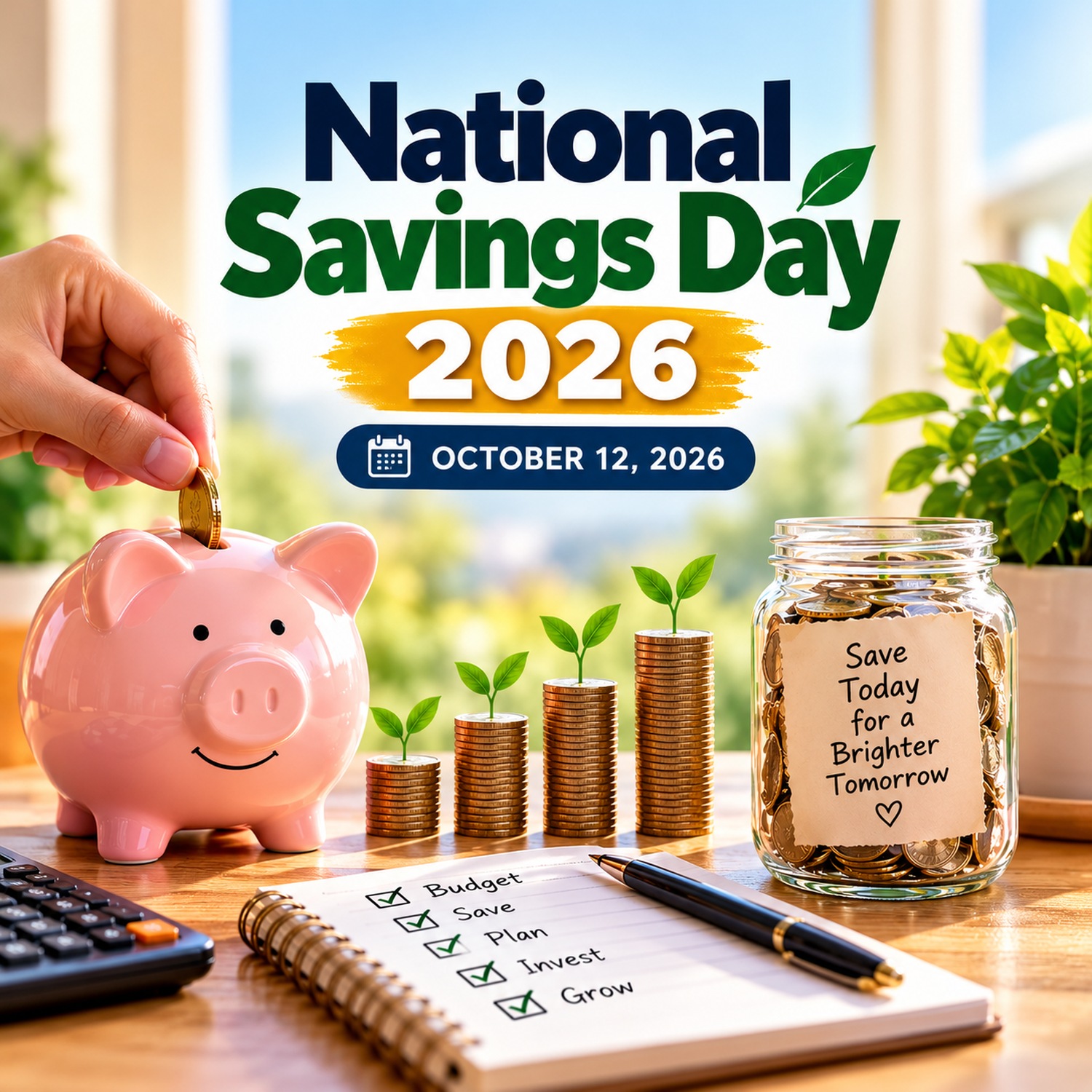
National Savings Day is observed every year on October 12 in the United States. In 2026, it falls on Monday, October 12.
Also Read: National Farmers Day 2026: Date, History, Importance and Ways to Celebrate
The day encourages people to think about their saving habits, set realistic financial goals, and take practical steps toward better financial preparedness. Saving money does not always require a large income. Even small, regular contributions can help create a stronger financial cushion over time.
National Savings Day 2026 is a good opportunity to review your spending, identify areas where you can save, and make a simple plan for your financial goals.
What Is National Savings Day?
National Savings Day is an annual observance that promotes the importance of saving money and developing healthy financial habits.
The observance was founded by Capital One and began in 2017. It encourages people to make saving a regular part of their financial routine rather than waiting until they have a large amount of extra money.
Saving can serve different purposes. Someone may be building an emergency fund, saving for a major purchase, preparing for education, planning a vacation, or working toward long-term financial goals.
The main idea is simple: understand your finances, set a realistic goal, and make saving a consistent habit.
When Is National Savings Day 2026?
National Savings Day 2026 will be observed on Monday, October 12, 2026.
| Detail | Information |
|---|---|
| Observance | National Savings Day |
| Date | October 12, 2026 |
| Day | Monday |
| Frequency | Annual |
| Country | United States |
| Main Focus | Saving money and financial awareness |
National Savings Day is observed on October 12 each year.
History of National Savings Day
National Savings Day was established by Capital One to encourage people to develop stronger saving habits. It began in 2017 and has become an annual opportunity to discuss saving and financial preparedness.
The observance focuses on making saving more approachable. People have different incomes, expenses, and financial responsibilities, so there is no single savings strategy that works for everyone.
The goal is to encourage people to take practical steps that fit their individual circumstances.
For More Information Read Here…
Why Is National Savings Day Important?
Saving money can provide greater financial flexibility when unexpected expenses arise. It can also make planned expenses easier to manage.
Some important benefits of saving include:
- Preparing for unexpected expenses
- Building an emergency fund
- Working toward financial goals
- Preparing for major purchases
- Reducing dependence on credit for unexpected costs
- Developing better money-management habits
- Increasing financial confidence
- Creating a financial cushion for the future
The amount saved is not the only important factor. Consistency also matters.
Why Do People Struggle to Save Money?
Saving can be challenging when most of an individual’s income is already committed to regular expenses.
Housing, food, transportation, utilities, insurance, debt payments, and other essential costs can make it difficult to set money aside.
Other common challenges include:
- Impulse purchases
- Unplanned spending
- Unused subscriptions
- Frequent dining out
- Online shopping
- Lifestyle inflation
- Lack of a budget
- Irregular income
- Unexpected bills
Instead of trying to eliminate every nonessential expense, it is often more practical to identify a few areas where spending can be reduced.
Simple Ways to Save More Money in 2026
National Savings Day can be a useful reminder to make saving part of your regular financial routine.
Create a Realistic Budget
Start by listing your income and regular expenses. Divide spending into categories such as housing, food, transportation, utilities, debt payments, entertainment, and savings.
A realistic budget is easier to maintain than one that removes every expense you enjoy.
Track Your Spending
Tracking your purchases can show where your money is actually going.
You can use a spreadsheet, notebook, budgeting app, or another method that is convenient for you.
Once you understand your spending patterns, it becomes easier to identify unnecessary expenses.
Automate Your Savings
Consider setting up an automatic transfer from your checking account to your savings account.
Automation can make saving easier because the money is transferred regularly without requiring you to remember each time.
Review Your Subscriptions
Check your monthly subscriptions and memberships.
If you are paying for services you rarely use, consider canceling them. Small recurring charges can add up over time.
Reduce Unnecessary Spending
Look for expenses that provide limited value.
For example, preparing more meals at home, comparing prices before purchasing, reducing impulse shopping, or limiting unnecessary deliveries may create additional room in your budget.
Set Specific Savings Goals
A clear goal can make saving more motivating.
Instead of simply deciding to “save more,” choose a specific purpose, such as building an emergency fund, paying for education, purchasing a vehicle, or preparing for another planned expense.
How to Start an Emergency Fund
An emergency fund is money set aside for unexpected expenses or financial emergencies.
The appropriate amount depends on factors such as income, regular expenses, job stability, debt, and family responsibilities. There is no single amount that is suitable for everyone.
If you are starting from nothing, begin with an amount that fits comfortably within your budget. The priority is to establish the habit and gradually build your savings.
Keeping emergency savings separate from everyday spending can also make it easier to avoid using the money for routine purchases.
National Savings Day Ideas for Families
National Savings Day can be a useful opportunity for families to discuss money and financial goals.
Families can:
- Set a shared savings goal.
- Review unnecessary household expenses.
- Plan affordable meals at home.
- Have a no-spend day.
- Create a simple savings challenge.
- Teach children the difference between needs and wants.
- Encourage children to save part of their allowance or earnings.
- Discuss the importance of planning before spending.
These activities can make financial conversations more practical and easier for children to understand.
National Savings Day Ideas for Students
Students can also use National Savings Day to develop good financial habits.
Some simple ideas include:
- Track daily spending.
- Set a small savings goal.
- Save part of an allowance or income.
- Compare prices before buying.
- Reduce unnecessary food deliveries.
- Avoid impulse purchases.
- Learn basic budgeting.
- Save for a planned purchase.
Developing these habits early can make money management easier later in life.
National Savings Day Tips for Adults
Adults can use October 12 as a reminder to review their overall financial situation.
Consider reviewing:
- Monthly expenses
- Savings contributions
- Emergency savings
- Recurring subscriptions
- Debt payments
- Insurance costs
- Retirement contributions
- Short-term financial goals
- Long-term financial goals
You do not have to change everything at once. Improving one or two areas can be a practical starting point.
National Savings Day Ideas for Businesses
Businesses can also use the occasion to review expenses and financial planning.
Small businesses can consider:
- Reviewing recurring subscriptions
- Comparing service costs
- Tracking operating expenses
- Removing unnecessary costs
- Building a cash reserve
- Reviewing the business budget
- Setting financial goals
The objective should be to use business funds efficiently while maintaining the quality of products or services.
How to Celebrate National Savings Day 2026
National Savings Day does not require a complicated celebration. You can observe it by taking a few practical financial steps.
On October 12, you can:
- Review your recent spending.
- Check your monthly budget.
- Identify one unnecessary expense.
- Transfer a manageable amount into savings.
- Review your financial goals.
- Check your subscriptions.
- Start or update an emergency savings plan.
- Discuss saving habits with your family.
- Choose one money-saving habit to continue.
- Track your progress over the following months.
The most useful way to celebrate is to turn one day’s awareness into a long-term habit.
National Savings Day and Financial Literacy
Saving is an important part of financial literacy, but it is not the only part.
Financial literacy also includes understanding budgeting, credit, debt, insurance, investing, and retirement planning.
Learning these concepts can help people make more informed financial decisions.
National Savings Day provides a simple starting point because saving is a habit that can be developed regardless of a person’s current level of financial knowledge.
Common Saving Mistakes to Avoid
Setting Unrealistic Savings Goals
A goal that is too aggressive can be difficult to maintain. Set an amount that works with your actual income and expenses.
Ignoring Small Recurring Expenses
Small purchases and subscriptions can become significant when they continue month after month. Review recurring expenses regularly.
Not Tracking Spending
It is difficult to identify opportunities to save if you do not know where your money is going.
Using Savings for Everyday Spending
Try to keep savings for specific goals or emergencies rather than treating the account as an extension of your regular spending money.
Giving Up After a Setback
Unexpected expenses can interrupt a savings plan. A setback does not mean the plan has failed. Restart when your financial situation allows.
National Savings Day 2026 FAQs
1. When is National Savings Day 2026?
National Savings Day 2026 will be observed on Monday, October 12, 2026.
2. What is National Savings Day?
National Savings Day is an annual observance that encourages people to save money, set financial goals, and develop better financial habits.
3. Who founded National Savings Day?
National Savings Day was founded by Capital One and began as an annual observance in 2017.
4. Why do we celebrate National Savings Day?
The day encourages people to review their saving habits and take practical steps toward greater financial preparedness.
5. How can I celebrate National Savings Day?
You can celebrate by reviewing your budget, tracking expenses, transferring money into savings, setting a financial goal, or discussing saving habits with your family.
6. What is a simple way to start saving money?
Start with an amount that fits your budget and save consistently. Automatic transfers can make regular saving easier.
7. How can families save more money?
Families can review household expenses, reduce unnecessary purchases, plan meals, cancel unused subscriptions, and establish shared savings goals.
8. What is an emergency fund?
An emergency fund is money set aside for unexpected expenses or financial emergencies. The appropriate amount depends on each person’s circumstances.
Final Thoughts
National Savings Day 2026 is a reminder to take a closer look at your saving habits and financial goals. Saving does not have to begin with a large amount. What matters is creating a realistic plan and following it consistently.
On October 12, 2026, take one practical step: review your spending, set a savings goal, automate a contribution, or start building an emergency fund.
A single day cannot change your finances, but a useful habit started on that day can continue throughout the year.