


Introduction
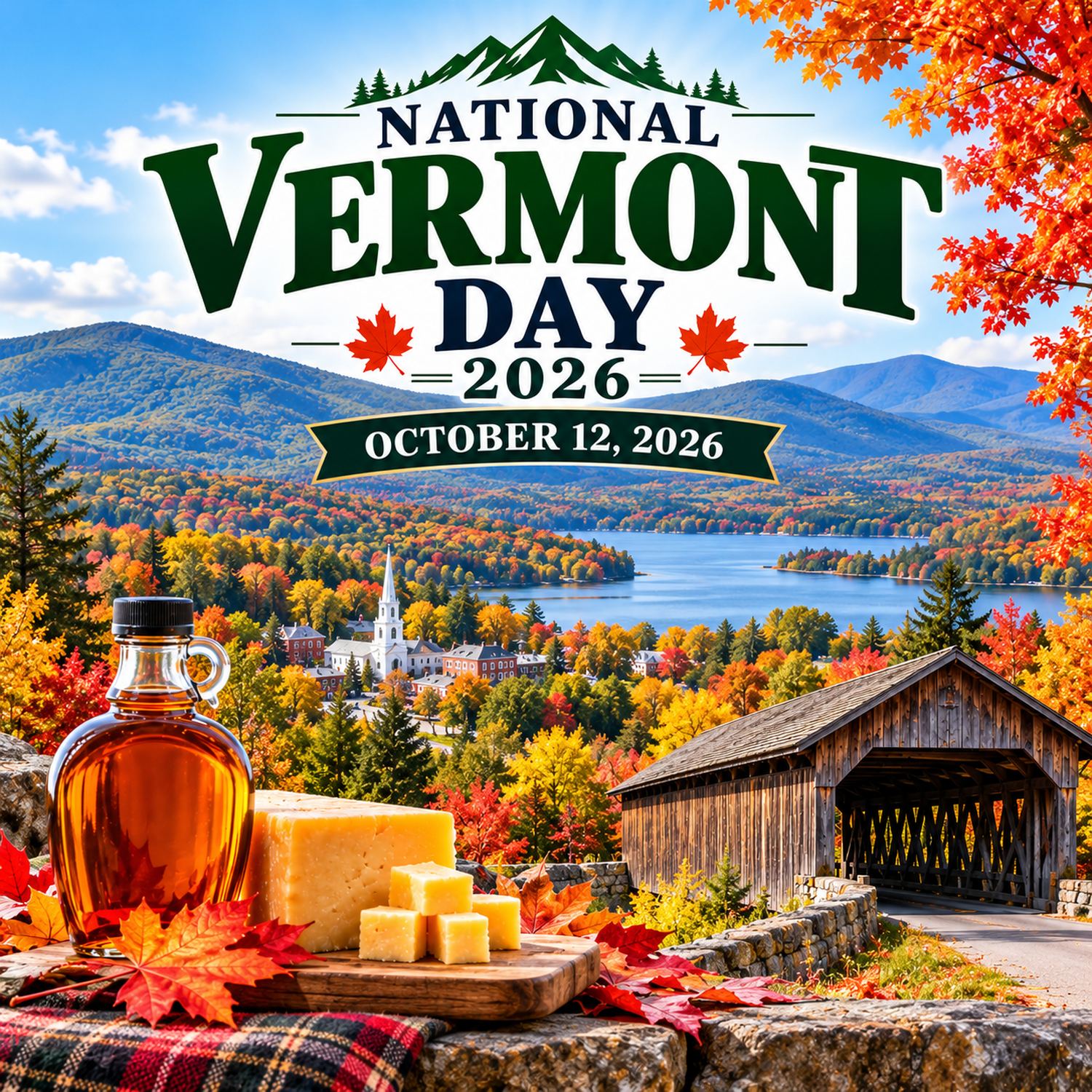
National Vermont Day 2026 is an opportunity to appreciate the history, culture, natural beauty, and traditions of Vermont. Known as the Green Mountain State, Vermont is recognized for its mountains, maple syrup, fall foliage, covered bridges, local cheese, and important role in early American history.
Also Read: National Online Bank Day 2026: Date, History, Benefits & How to Celebrate
National Vermont Day 2026 will be observed on Monday, October 12, 2026.
The observance is especially interesting in 2026 because the United States is commemorating its 250th anniversary, making it a good time to learn more about Vermont’s Revolutionary-era history and its journey to statehood.
When Is National Vermont Day 2026?
National Vermont Day 2026 falls on Monday, October 12, 2026.
The annual observance provides an opportunity to learn about Vermont and recognize the state’s history, people, culture, landscapes, and traditions. Since October is also associated with Vermont’s colorful fall foliage, it is a fitting time to appreciate the state’s natural scenery.
What Is National Vermont Day?
National Vermont Day is an observance that celebrates the state of Vermont.
It is a chance to explore Vermont’s history, learn about important people and events, discover its food and traditions, and appreciate its natural environment.
People can observe the day by learning about Vermont’s past, visiting historic locations, enjoying Vermont foods, exploring the outdoors, or sharing interesting facts about the state.
National Vermont Day is not a federal holiday and should not be confused with Vermont’s statutory legal holidays.
Why Is Vermont Called the Green Mountain State?
Vermont is widely known as the Green Mountain State because of its Green Mountains.
The mountains extend through much of the state and have influenced Vermont’s outdoor culture and tourism. Hiking, skiing, camping, scenic drives, and wildlife viewing are popular activities in the region.
The name “Vermont” is also associated with the French words vert and mont, meaning “green mountain.”
A Brief History of Vermont
Vermont has a distinctive place in American history.
Before European settlement, the region was home to Indigenous peoples, including the Abenaki. During the colonial period, competing claims over the territory contributed to political and territorial disputes.
During the American Revolutionary era, Vermont developed an independent identity. In 1777, Vermont declared itself an independent republic.
The Vermont Republic continued to operate independently until Vermont joined the United States.
On March 4, 1791, Vermont became the 14th state admitted to the Union.
This unusual path from independent republic to U.S. state is one of the most interesting parts of Vermont’s history.
For More Information Read Here…
Vermont and the American Revolution
Vermont played an important role during the American Revolutionary period.
The Green Mountain Boys, associated with figures such as Ethan Allen, became an important part of Vermont’s Revolutionary-era story.
Vermont’s location near Lake Champlain also made the region strategically important.
Some important events connected to Vermont include:
- The capture of Fort Ticonderoga
- The Battle of Hubbardton
- The Battle of Bennington
- The Battle of Valcour Island
- The activities of the Green Mountain Boys
- The leadership of Ethan Allen
These events are an important part of Vermont’s historical identity.
Why Is 2026 Important for Vermont?
The year 2026 marks the 250th anniversary of the Declaration of Independence, making it a major year for historical programs and commemorations throughout the United States.
Vermont’s Revolutionary-era history gives the state a particularly relevant connection to these national commemorations.
National Vermont Day 2026 can therefore be used as an opportunity to look beyond the state’s scenery and learn about its role in the formation of the United States.
It is a chance to consider how Vermont developed its own political identity and eventually became the 14th state.
What Is Vermont Famous For?
Vermont is associated with several well-known natural, agricultural, and cultural features.
Maple Syrup
Vermont is one of the best-known maple syrup-producing states in the United States. Maple sugaring is an important part of the state’s agricultural traditions.
Fall Foliage
Vermont’s autumn colors attract visitors who want to experience its forests, mountains, and rural landscapes during the fall season.
Green Mountains
The Green Mountains provide opportunities for hiking, skiing, camping, and other outdoor activities.
Covered Bridges
Historic covered bridges are a recognizable feature of Vermont’s rural landscape. They reflect the state’s architectural and transportation history.
Vermont Cheese
Vermont has a strong dairy tradition and is known for products such as Vermont cheddar and other locally produced cheeses.
Lake Champlain
Lake Champlain is one of Vermont’s most important natural landmarks. It supports recreation, tourism, fishing, boating, and scenic activities.
Vermont’s Famous Symbols and Traditions
Several things have become closely associated with Vermont, including:
- The Green Mountains
- Maple syrup
- Vermont cheddar
- Fall foliage
- Covered bridges
- Skiing and snowboarding
- Hiking
- Lake Champlain
- Small farms and rural communities
- Historic New England architecture
These features contribute to Vermont’s distinctive identity.
Places to Visit in Vermont
National Vermont Day can also be an opportunity to discover some of Vermont’s notable destinations.
Burlington
Burlington is located along Lake Champlain and is known for its waterfront, downtown area, and cultural attractions.
Montpelier
Montpelier is Vermont’s capital and offers opportunities to learn about the state’s government and history.
Stowe
Stowe is known for mountain scenery, outdoor recreation, and winter sports.
Bennington
Bennington has strong connections to Revolutionary War history and is associated with the Battle of Bennington.
Woodstock
Woodstock is known for its historic New England character, village setting, and scenic surroundings.
Lake Champlain
The lake offers opportunities for boating, fishing, sightseeing, and enjoying Vermont’s natural scenery.
Green Mountain National Forest
The national forest provides opportunities for hiking, camping, wildlife viewing, and enjoying the outdoors.
Famous People From Vermont
Vermont has been the birthplace or home of several notable Americans.
One of the best-known is Calvin Coolidge, the 30th president of the United States, who was born in Vermont.
The state has also been associated with numerous writers, politicians, artists, entrepreneurs, and other historical figures.
Learning about notable Vermonters can provide another way to understand the state’s contribution to American history and culture.
How to Celebrate National Vermont Day 2026
There are many simple ways to observe National Vermont Day, whether you live in Vermont or somewhere else in the United States.
Learn About Vermont History
Read about Vermont’s history as an independent republic and its admission to the United States in 1791.
Explore Revolutionary War History
Learn about Ethan Allen, the Green Mountain Boys, the Battle of Bennington, and other Revolutionary-era events.
Try Vermont Foods
Enjoy maple syrup, Vermont cheddar, or other foods associated with the state’s agricultural traditions.
Enjoy Fall Scenery
If you are in Vermont in October, take a scenic drive, visit a park, or explore an area known for autumn foliage.
Visit a Historic Site
Museums, historic buildings, battlefields, covered bridges, and other heritage sites can provide a closer look at Vermont’s past.
Share Vermont Facts
Share an interesting Vermont fact with friends or on social media. You can use hashtags such as #NationalVermontDay and #Vermont.
Learn About America’s 250th Anniversary
Use 2026 as an opportunity to explore Vermont’s connection to the American Revolution and the early history of the United States.
Fun Facts About Vermont
Here are some quick facts to share on National Vermont Day:
- Vermont is known as the Green Mountain State.
- Vermont became the 14th U.S. state in 1791.
- Vermont operated as an independent republic before joining the Union.
- The state is famous for maple syrup.
- The Green Mountains extend through much of Vermont.
- Lake Champlain is one of the state’s major natural features.
- Vermont is known for historic covered bridges.
- Fall foliage is one of the state’s most popular attractions.
- Vermont has important connections to the American Revolutionary War.
- Calvin Coolidge, the 30th U.S. president, was born in Vermont.
Is National Vermont Day a Federal Holiday?
No. National Vermont Day is not a federal holiday.
It is an observance that recognizes Vermont and its history, culture, and identity. Federal holidays are established separately under U.S. federal law.
Is National Vermont Day an Official Vermont State Holiday?
National Vermont Day is not included in Vermont’s statutory list of legal holidays.
This means people can celebrate and recognize the occasion, but it should not be described as an official state legal holiday.
National Vermont Day 2026 FAQs
1. When is National Vermont Day 2026?
National Vermont Day 2026 will be observed on Monday, October 12, 2026.
2. What is National Vermont Day?
National Vermont Day is an observance dedicated to celebrating Vermont’s history, culture, natural beauty, traditions, and identity.
3. Why is Vermont called the Green Mountain State?
Vermont is called the Green Mountain State because of the Green Mountains that run through the state. The name Vermont is also associated with French words meaning “green mountain.”
4. What is Vermont famous for?
Vermont is famous for maple syrup, fall foliage, the Green Mountains, covered bridges, Vermont cheese, Lake Champlain, skiing, and its historic communities.
5. When did Vermont become a state?
Vermont became the 14th state of the United States on March 4, 1791.
6. Was Vermont ever an independent republic?
Yes. Vermont declared itself an independent republic in 1777 and remained independent until it joined the United States in 1791.
7. Is National Vermont Day a federal holiday?
No. National Vermont Day is an observance, not a federal holiday.
8. How can I celebrate National Vermont Day?
You can celebrate by learning about Vermont history, visiting a historic site, enjoying maple syrup or Vermont cheese, exploring nature, or sharing Vermont facts with others.
9. Why is National Vermont Day 2026 significant?
2026 is the 250th anniversary year of the Declaration of Independence. Vermont’s Revolutionary-era history makes it a particularly relevant year to learn about the state’s role in early American history.
Final Thoughts
National Vermont Day 2026 is a good opportunity to learn more about one of America’s most distinctive states. Vermont’s history, Green Mountains, maple syrup, fall foliage, covered bridges, local foods, and Revolutionary-era heritage all contribute to its identity.
On October 12, 2026, people can celebrate by learning something new about Vermont, exploring its history, appreciating its natural beauty, or sharing the state’s story with others.
With the United States commemorating its 250th anniversary in 2026, National Vermont Day also provides a timely opportunity to understand Vermont’s place in the nation’s early history and its journey from an independent republic to the 14th state.