


Introduction
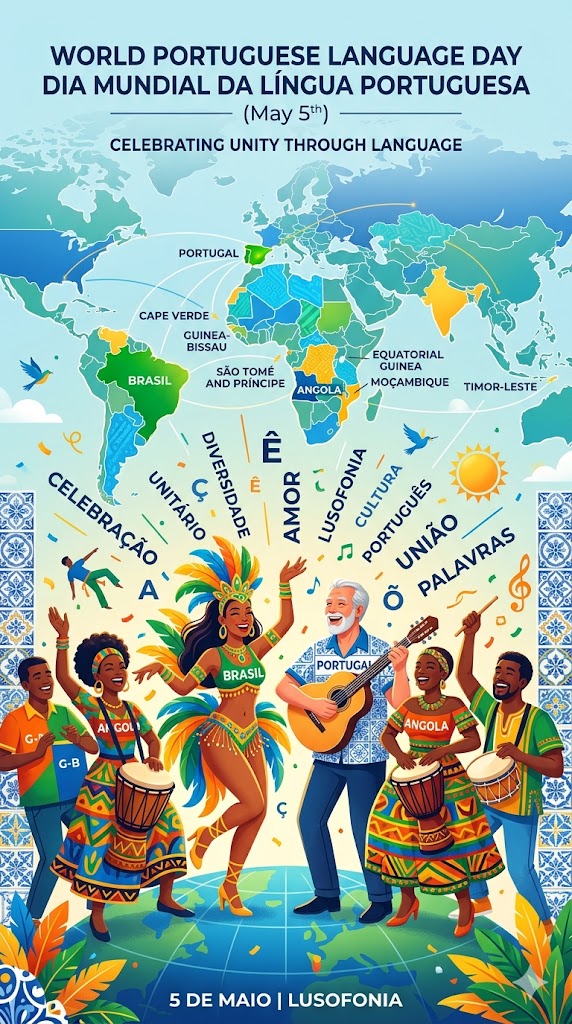
Languages are more than just words—they are bridges that connect cultures, ideas, and people across continents. Among the world’s most influential languages, Portuguese stands out for its rich history and global reach. Celebrated every year on May 5, World Portuguese Language Day 2026 highlights the importance of linguistic diversity and cultural unity among Portuguese-speaking nations.
Also Read: World Asthma Day 2026: Theme, History, Significance & Prevention Tips
In 2026, this day continues to remind us how a single language can unite millions across different continents. With over 260 million speakers worldwide, Portuguese is not just a language of communication—it is a symbol of shared heritage, literature, and identity.
Let’s explore its history, significance, and why this day matters more than ever today.
What is World Portuguese Language Day?
World Portuguese Language Day is an international observance dedicated to celebrating the Portuguese language and the cultures of Lusophone (Portuguese-speaking) countries. It was officially established in 2019 by UNESCO, recognizing Portuguese as a global language with deep cultural roots.
The day is celebrated annually on May 5 and aims to promote multilingualism, cultural exchange, and the preservation of linguistic heritage. It also acknowledges the role of Portuguese in connecting countries across Europe, South America, Africa, and parts of Asia.
This celebration is not just about language—it is about identity, history, and unity. It highlights how Portuguese has evolved over centuries while maintaining its cultural richness across different regions.
History and Origin
The origins of the Portuguese language date back to Latin, brought to the Iberian Peninsula during the Roman Empire. Over time, it evolved into a distinct language in the region that is now modern-day Portugal.
The global spread of Portuguese began during the Age of Exploration in the 15th and 16th centuries, when Portuguese explorers traveled to Africa, Asia, and South America. As a result, the language expanded far beyond Europe.
A major role in promoting the language globally has been played by the Community of Portuguese Language Countries, established in 1996. This organization brings together Portuguese-speaking nations to strengthen cultural and political ties.
Recognizing its growing global importance, UNESCO officially declared May 5 as World Portuguese Language Day in 2019. Since then, it has become a key occasion to celebrate linguistic diversity and cultural exchange worldwide.
🗺️ Portuguese Language Around the World
Portuguese is one of the most widely spoken languages in the world, with a presence across multiple continents. It is the official language of countries such as Brazil, Portugal, Angola, Mozambique, Guinea-Bissau, Cape Verde, São Tomé and Príncipe, and East Timor.
Brazil alone accounts for the majority of Portuguese speakers, making it the largest Lusophone country. Meanwhile, African nations like Angola and Mozambique are experiencing rapid growth in Portuguese-speaking populations.
The language also has historical roots in parts of Asia, including Goa in India and Macau in China. Today, Portuguese continues to grow as a global language, especially in business, diplomacy, and digital communication.
Its widespread use across continents makes Portuguese a powerful tool for international connection, trade, and cultural exchange.
World Portuguese Language Day 2026 Theme
Each year, World Portuguese Language Day is celebrated with a specific theme that reflects current global priorities. The official theme for 2026 not announced yet, once it announced it will be published on this page.
The 2026 theme is expected to highlight the importance of language in connecting younger generations and promoting global collaboration in an increasingly digital age.
Themes often emphasize how languages like Portuguese can foster inclusion, creativity, and innovation across borders. They also encourage people to preserve linguistic heritage while adapting to modern communication trends.
💡 Significance and Importance
World Portuguese Language Day plays a crucial role in promoting multilingualism and cultural understanding. It reminds us that languages are essential for preserving traditions, stories, and identities.
Portuguese connects people from different continents, creating a shared cultural space despite geographical distances. It also supports education and literacy by encouraging people to learn and appreciate diverse languages.
In today’s globalized world, the importance of Portuguese continues to grow. It is widely used in international organizations, trade, and diplomacy. The language also opens doors to economic opportunities, especially in emerging markets like Brazil and Africa.
By celebrating this day, we recognize the power of language to unite people, promote peace, and strengthen global cooperation.
World Portuguese Language Day 2026 Activities
World Portuguese Language Day is celebrated with enthusiasm across the globe. Countries organize cultural events, educational programs, and artistic performances to highlight the beauty of the language.
Schools and universities conduct language workshops, poetry readings, and essay competitions. These activities help students engage with the language in creative ways.
Cultural institutions and embassies host exhibitions, music festivals, and film screenings that showcase Lusophone traditions. Online platforms also play a big role, with webinars, virtual classes, and social media campaigns spreading awareness worldwide.
These celebrations not only promote the language but also bring people together to appreciate cultural diversity and shared heritage.
📚 Interesting Facts About Portuguese Language
Portuguese is the sixth most spoken language in the world, with over 260 million speakers. It is also one of the fastest-growing languages, especially in Africa.
Brazil is home to the largest number of Portuguese speakers, followed by Portugal and several African countries. The language has its roots in Latin and shares similarities with Spanish, Italian, and French.
Portuguese has a rich literary tradition, with famous writers like Fernando Pessoa contributing to its global recognition.
Interestingly, Portuguese words and culture have influenced regions as far as India and Japan through historical trade and exploration.
🌱 Why Learning Portuguese Matters Today
Learning Portuguese can open up a world of opportunities. As a global language, it is valuable for careers in international business, tourism, and diplomacy.
Brazil, one of the world’s largest economies, offers significant business opportunities for Portuguese speakers. Similarly, African countries are emerging markets with growing economic potential.
Portuguese also allows learners to explore a rich cultural heritage, including music, literature, and cuisine. From Brazilian samba to Portuguese poetry, the language offers a unique cultural experience.
In the digital age, Portuguese content is rapidly expanding online, making it even more relevant for global communication.
Conclusion
World Portuguese Language Day 2026 is a celebration of culture, history, and global unity. Portuguese continues to connect millions of people across continents, bridging cultural and geographical gaps.
As we observe this day, it is an opportunity to appreciate linguistic diversity and recognize the role of language in shaping our world. Whether you are a language enthusiast, student, or professional, exploring Portuguese can enrich your understanding of global cultures.
So, this May 5, take a moment to celebrate the beauty of the Portuguese language and its incredible journey across the world.
Frequently Asked Questions (FAQs)
1. When is World Portuguese Language Day celebrated?
It is celebrated every year on May 5.
2. Who established World Portuguese Language Day?
It was established by UNESCO in 2019.
3. How many people speak Portuguese worldwide?
Over 260 million people speak Portuguese globally.
4. Which countries speak Portuguese?
Brazil, Portugal, Angola, Mozambique, and several others.
5. Why is Portuguese important today?
It supports global communication, trade, and cultural exchange.
6. What is the theme of 2026?
The official theme is expected to be announced closer to the date.
7. Why should I learn Portuguese?
It offers career opportunities and cultural enrichment.